The CRAM

Deep, structured work without pretending every road is straight.

A CRAM is a defined 12-cycle intensive built around one major area of change. Every cycle includes a private coaching session, four required development/application activities, and a required Session Integration. The work follows a curriculum—not a milestone pathway—and builds from one cycle into the next.

Current CRAMs

Choose the problem we are actually trying to solve.

Each CRAM uses the same intensive framework, but the curriculum is built around a specific coaching target. These are the CRAMs currently available.

New CRAM programs are added to this catalog as they are completed.

How a CRAM Is Designed

One goal. Twelve coaching cycles. Required work every cycle.

Five required client activities per cycle.

Each cycle contains four development/application activities scheduled around the coaching work plus one Session Integration after the private coaching session. Across 12 cycles, that is 60 required client activities—not optional worksheets added when convenient.
A curriculum, not a milestone pathway.

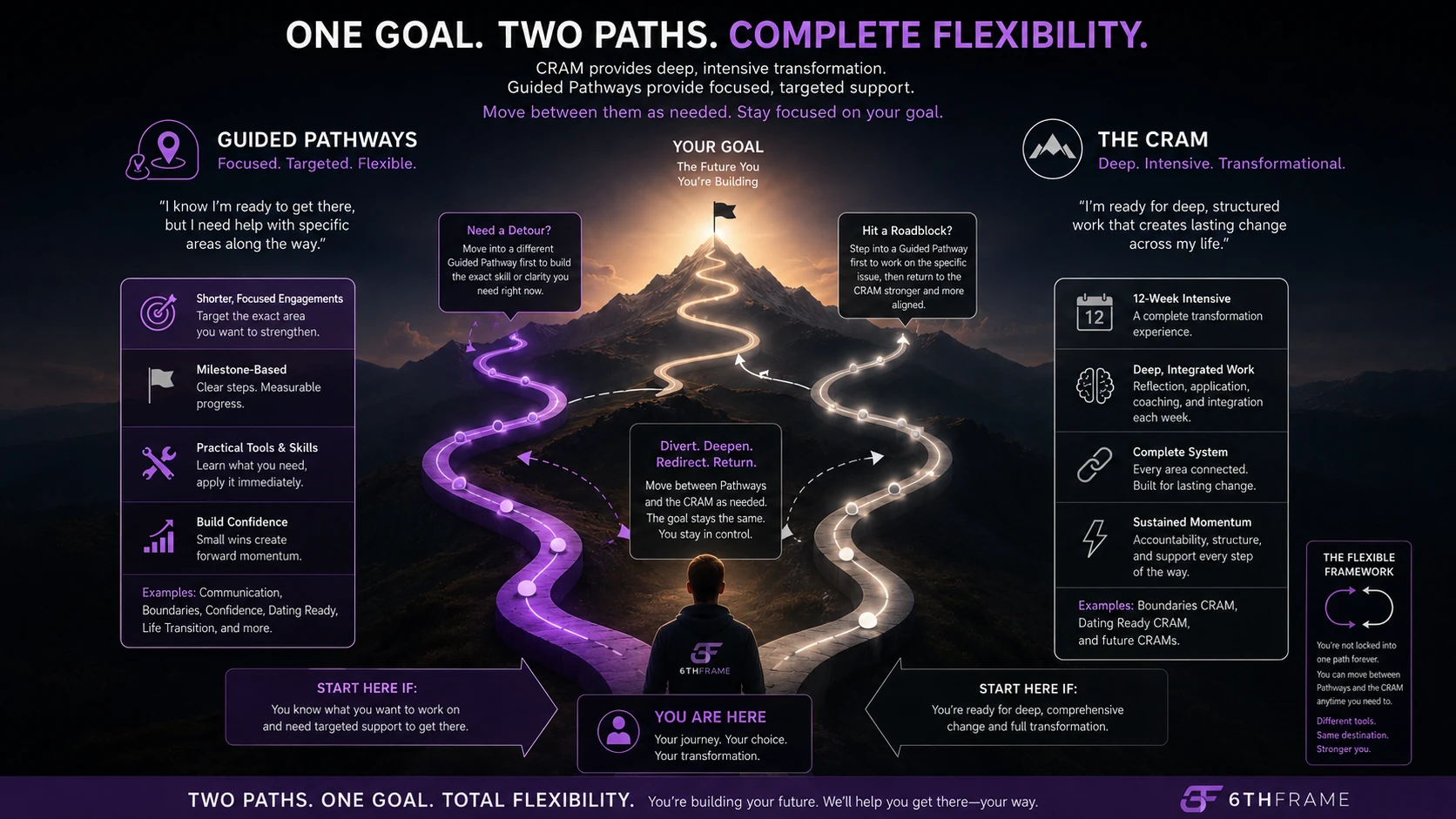
Guided Pathways move through personalized milestones. A CRAM does not. Its 12-cycle curriculum is already structured around the specific CRAM topic, and each cycle builds on the work that came before it.

A CRAM advances by completing the current coaching cycle and its required work—not by reaching a milestone. A reschedule can extend the current cycle without skipping ahead, and a focused Pathway detour can pause the CRAM without erasing its place or completed work.
When the CRAM Hits a Roadblock

A detour can protect the goal instead of abandoning it.

Sometimes the intensive reveals that a specific skill needs more focused attention before the CRAM can keep working effectively. That is where Guided Pathways become useful.

1

We identify the actual roadblock.

Instead of pushing harder at the same problem, we look at what is preventing the next useful step—communication, boundaries, accountability, rediscovery, reactions, or another focused area.

2

We can temporarily redirect into a Guided Pathway.

The focused Pathway builds the exact skill or clarity the client needs. This is not failure, and it does not mean the original goal disappeared.

3

We return to the CRAM when the client is better aligned.

The client comes back to the intensive with a stronger foundation instead of repeatedly getting stuck in the same place.

6thFrame flexible framework showing Guided Pathways and CRAM routes leading toward the same goal, with the ability to redirect between them as needed
Not Sure Which CRAM Fits?

You do not have to diagnose yourself before asking for help.

The free Discovery Session is where we talk about what is happening, what you want to change, and whether a CRAM, a Guided Pathway, Pay As You Go coaching, or no coaching at all makes the most sense.